


Focused induction heat helps expand the steel fastener and weaken the bond before you put heavy force on it.
Focused Heat for Stuck Steel Fasteners
Savary Flameless Bolt Heater
Savary Flameless Bolt Heater
✓ Focused heat for rusted steel nuts, bolts and studs
✓ No open flame around wiring, rubber, paint or tight spaces
✓ Built for garage repairs, trucks, farm equipment and trailers
BUNDLE & SAVE
Couldn't load pickup availability
- Visa payment method
- Master payment method
- American express payment method
- Paypal payment method
- Apple pay payment method
- Google pay payment method

100+ orders
in the last 24h
-

“I work on older trucks and hate using a torch near rubber lines and wiring. The coil keeps the heat right where I need it.”

Savary Flameless Bolt Heater
Regular price
$249.00
Sale price
$249.00
Regular price
$349.00
Unit price
per


Questions mechanics ask before buying
How do I use it?
How do I use it?
Place the correct coil around or close to the stuck steel fastener, apply short controlled heat cycles, then work the nut or bolt with the right wrench or socket while it is hot. Wear gloves and eye protection because the fastener gets very hot.
Does it replace a torch?
Does it replace a torch?
It gives you focused induction heat without starting with an open flame. That is useful around many tight areas with rubber, wiring, paint, plastic, bushings, or fuel-sensitive surroundings. It does not remove the need for normal shop safety.
What fasteners does it work on?
What fasteners does it work on?
It is designed for magnetic steel nuts, bolts, studs, fittings, brackets, and similar ferrous fasteners. It is not the right tool for aluminum, copper, plastic, or non-magnetic parts.
Heat the stuck steel fastener before you force it.
Focused induction heat helps loosen rust, corrosion and thread-lock bonds without starting with an open flame.
No torch firstUseful near wiring, rubber, bushings, paint and tight repair areas.
Real repair jobsExhaust, suspension, trailers, mowers, older trucks and farm equipment.
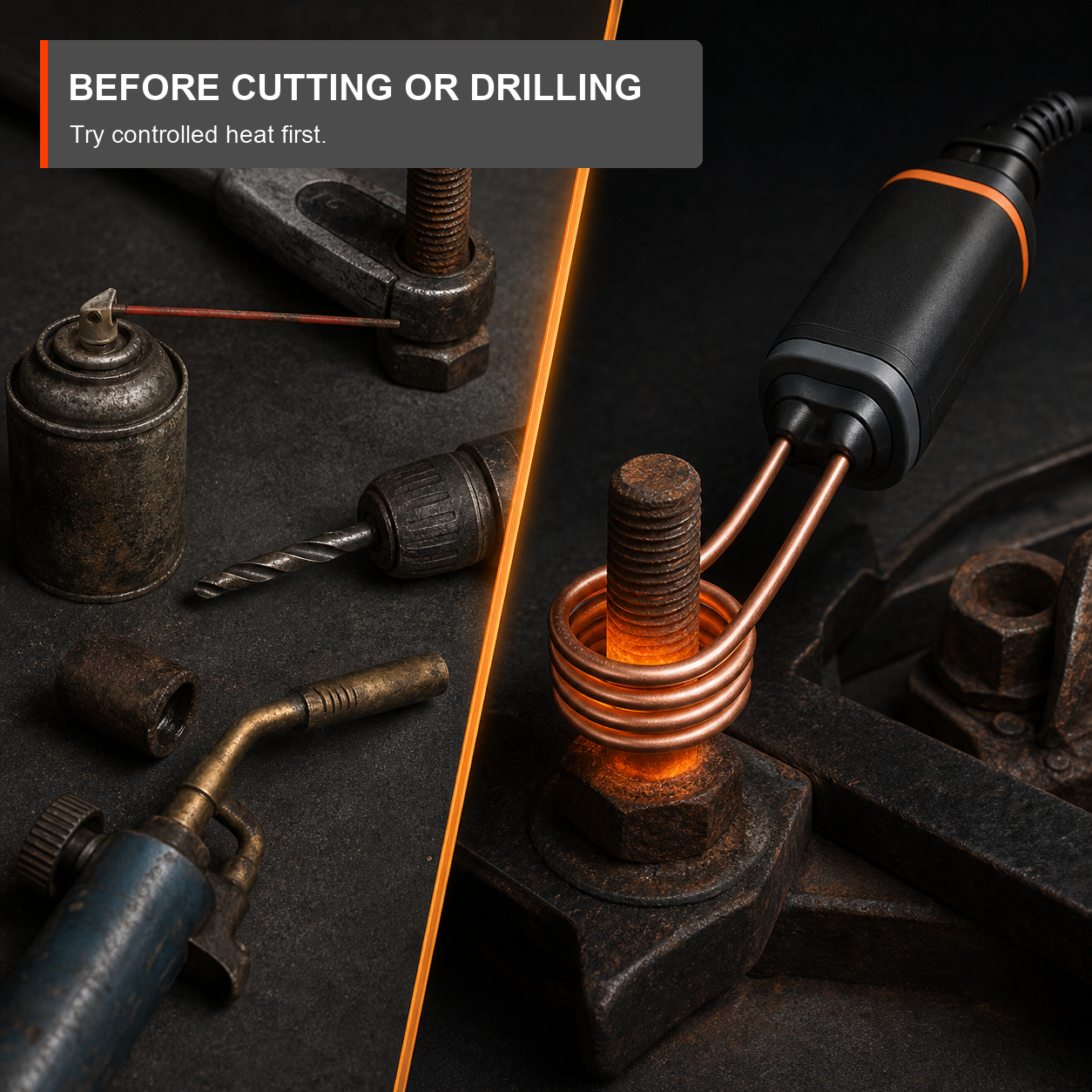
Better first stepTry controlled heat before rounding, snapping, cutting or drilling.

Before cutting or drilling
Give the metal a better chance to move first.
When a fastener is seized, the expensive part is usually what happens after you force it. Use focused heat before the job turns into extraction.
1
Heat the stuck steelApply focused induction heat directly to the fastener.
2
Avoid starting with flameA cleaner first move around rubber, wiring, paint and tight repair areas.
3
Then loosen with controlUse the right socket or wrench after the heat cycle, before drilling or cutting.
Why mechanics use heat first
Break the bond before the bolt breaks.
No open flame as the first move when the job is close to hoses, bushings, paint, plastic, or sensitive areas.
It gives you a cleaner first option before the repair turns into extraction, drilling, or replacing extra parts.
Why use focused induction heat?
For rusted steel fasteners, controlled heat is the better first move before excessive force.

|
Others | |
|---|---|---|
| Focused heat on steel fasteners | ||
| No open flame as the first move | ||
| Useful in tight repair areas | ||
| Helps avoid drilling or extraction |
Customer repair notes
The repairs customers mention most.
★★★★★
“I had brake line and rubber close by, so I did not want a torch there. Heated the nut, worked it slowly, and it finally moved.”
BR
Ben R.Brake hardware · Verified buyer
★★★★★
“Trailer bolts were rusted from sitting outside. This gave me a cleaner first shot before cutting anything off.”
CM
Chris M.Trailer repair · Verified buyer
★★★★★
“Best part is control. The heat goes into the fastener instead of turning the whole area into a fire risk.”
JT
James T.Older truck work · Verified buyer
Stop letting one fastener control the whole repair.
Add focused heat before you round the head, snap the bolt, or spend the afternoon drilling out what could have moved with a better first step.